
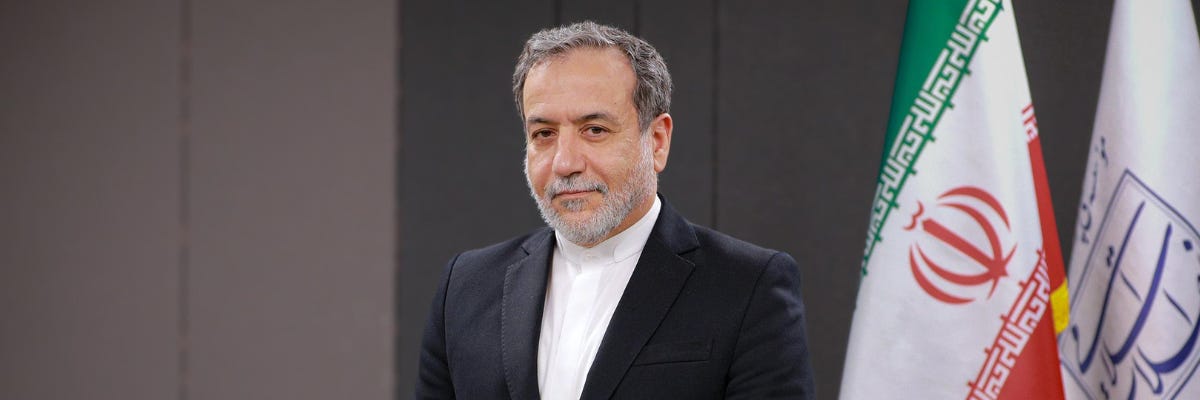
By Zeynab Malakouti and Mohammad Eslami
It appears we are on the verge of a new phase in the U.S.-Israeli war against Iran—one that could include ground troops deployed to Iranian islands or nuclear sites. Yet, with the war entering its second month, voices inside the U.S. administration, as well as regional and international leaders, are calling for negotiations. The Iran war is likely to end only when all parties can present the outcome as a form of victory. In this sense, a settlement will require that the parties in the conflict make reasonable concessions that can be viewed as “achievements” for the other side.
What is needed is a “win-win” outcome, or, more precisely, a situation in which neither the U.S. nor Iran is cast as a loser. Therefore, it is necessary to facilitate genuine diplomacy, rather than the maximalist approaches that would make a resolution far more difficult. Such a framework would need to differ from the recent failed attempts, both the Joint Comprehensive Plan of Action (JCPOA) and the diplomatic process of the past year which ended in Geneva talks just prior to the current war.
Underlying any serious discussion of a durable diplomatic settlement is a reality that military power alone cannot alter: the core disputes between Iran, the U.S., and Israel have no sustainable military resolution. Military operations, however precise or overwhelming, incur unacceptable costs and casualties while leaving the fundamental grievances unresolved. In the absence of a diplomatic framework, the cycle of escalation will inevitably continue.
Solving the Nuclear Dilemma
Even though President Donald Trump previously claimed, following the 12-Day War, that Iran’s nuclear capabilities had been “obliterated,” recent strikes on nuclear sites suggest that this was not entirely the case. For the U.S. and Israel, a central objective continues to be the complete dismantlement of Iran’s nuclear program.
It is unclear if Iran’s new Supreme Leader, Ayatollah Mojtaba Khamenei, will continue to adhere to the fatwa issued by his father, Ayatollah Ali Khamenei, which prohibits nuclear weapons. But if this position is stated clearly, if monitoring and verification return, and if Iran is granted the right to maintain a peaceful civilian nuclear program under strict limitations, a compromise can be found.
In practice, although Iran possesses the technical expertise, most of its key nuclear facilities have been targeted or degraded. These include important sites such as in Natanz, Isfahan, and Fordow, as well as the yellowcake production facility in Ardakan, which processes uranium ore in the early stages of the fuel cycle, and the heavy-water reactor in Arak.
A potential agreement could involve the destruction or strict limitation of key nuclear facilities, along with a decision regarding Iran’s stockpile of enriched uranium, estimated at around 400 kilograms, which could be transferred, reduced, or placed under international supervision. In such a scenario, the U.S. and Israel could declare victory by claiming that Iran’s nuclear program has been effectively neutralized.
On the other hand, Iran’s insistence on maintaining its right to research, produce, and use nuclear energy for peaceful purposes under Article IV of the Treaty on the Non-Proliferation of Nuclear Weapons (NPT) is politically significant for domestic audiences, as the state has spent over two decades and billions of dollars to frame nuclear energy as a sovereign right of the Iranian people. Recently, a fast-track bill has been proposed in the parliament, including three key measures: withdrawal from the NPT, the repeal of legislation governing Iran’s commitments under the nuclear deal, and support for a new international framework with aligned countries for the development of peaceful nuclear technology. If adopted, this would signal that a future agreement is unlikely in practice, as Iran may be moving toward a policy that keeps the option of nuclear weapons open.
The foundational premise of any diplomatic settlement in this war is that the Trump administration must come to terms with a reality that has long been evident: the decades-old nuclear dispute with Iran has no military solution.
However, the underlying concern persists; the issue of uranium enrichment itself. Iran retains the technical capacity to increase enrichment levels if it perceives an existential threat. Consequently, Americans and Israelis are aware that allowing Iran to maintain uranium enrichment at levels of 3–5 percent for civilian purposes could facilitate a relatively rapid escalation to higher enrichment levels.
One possible solution would be the establishment of a multinational uranium enrichment consortium under the supervision of the International Atomic Energy Agency (IAEA), involving Saudi Arabia, the United Arab Emirates, and European countries. However, a key point of contention is that Iran has insisted on hosting such a consortium within its territory, while others might strongly oppose this option. But given that the destruction of uranium enrichment facilities during the 12-Day War and the recent conflict has been extensive, Iran could accept a middle-ground approach, whereby the uranium enrichment cycle and nuclear fuel production are geographically distributed across the region, rather than concentrated within a single state.
In this scenario, the further repudiation of nuclear ambitions could reduce the perception of an existential threat and create space for more stable regional relations. However, Iran’s relations with the countries of the Gulf Cooperation Council require significant revision and rebuilding, as the current war shows that, for the moment, Iran is perceived as a profound threat by its Arab neighbors.
The foundational premise of any diplomatic settlement in this war is that the Trump administration must come to terms with a reality that has long been evident: the decades-old nuclear dispute with Iran has no military solution.
Sanctions Relief
If a minimal agreement were reached on Iran’s nuclear program, the primary demand on the Iranian side would be the lifting of sanctions. The maximalist approach, as reflected in the 15-point US proposal reportedly shared with Iran, suggests that if U.S. demands are fully met, the outcome would be comprehensive sanctions relief. However, this proposal has been rejected by Iran. More pragmatically, defining the minimum requirements for both sides is therefore essential to reaching an agreement. If the U.S. fails to extract maximal concessions from Iran, any sanctions relief would likely need to remain partial and exclude measures related to human rights violations and support for terrorism. In this context, relief could initially take the form of limited measures, such as waivers for the purchase of Iranian oil, as occurred during the war when the US waived sanctions on Iranian oil purchases at sea for 30 days, or controlled access to frozen assets, particularly for the reconstruction of the energy sector.
For Iran, especially in the aftermath of the war and given the scale of destruction, the situation is different. Although military strikes have significantly degraded Iran’s nuclear infrastructure, Iran has not entirely lost its bargaining leverage, as it retains technical expertise, residual capabilities, and a stockpile of approximately 400 kilograms of enriched uranium, the status and location of which remain uncertain. If Iran were to concede this remaining leverage—namely, its nuclear program and enrichment capacity—it would require sanctions relief substantial enough to generate meaningful economic recovery. This would be necessary not only for rebuilding its economic infrastructure, but also for demonstrating domestically that the costs of war and nuclear concessions have resulted in a fair and equitable outcome, namely, the preservation of a peaceful nuclear program alongside the lifting of sanctions. However, the perceived level of fairness will ultimately depend on several factors, such as whether sanctions relief is partial or comprehensive, and the outcome of the war
Regarding sanctions relief, several key dimensions require further analysis, including the sectors targeted, the duration of relief, and whether primary and secondary sanctions are included. These elements depend on two critical factors, which are not clear at this moment: first, how the war ends; and second, the extent to which Iran’s economic capacity contributes to the survival of the Islamic Republic, particularly in maintaining domestic stability and sustaining elite and societal support.
For European stakeholders, this suggests a strategic choice. Instruments such as the snapback mechanism confer influence primarily in moments of confrontation, not in periods of stability. This was evident in October 2025, when all previously lifted UN sanctions on Iran under six UN Security Council resolutions were reimposed through the snapback mechanism following a decision by France, Germany, and the United Kingdom.
If the United Kingdom, France, and their European partners seek to play a constructive role in a post-conflict order, they must be prepared to relinquish tools designed for pressure in favor of those designed for peace. The greater strategic reward lies not in preserving leverage for the next crisis, but in helping to build a settlement that makes such crises obsolete. In this context, Iran’s experience with the snapback mechanism is likely to make it strongly resistant to the inclusion of any comparable automatic enforcement mechanism in future agreements.
Range Limits
The missile program remains one of the most challenging aspects of any potential agreement. Iran has consistently stated that its missile capabilities are non-negotiable and remain off the table. In practice, since the early 2000s, missiles have been Iran’s primary area of military investment. This war has reinforced Iran’s perceptions. Iran’s air defense systems have shown clear limitations, meaning that, in military terms, Iran relies heavily on missiles and relatively low-cost drones for deterrence, self-defense, and offense.
From Iran’s perspective, any substantial reduction in its missile capabilities—whether in terms of quantity or range—would directly increase its vulnerability in future conflicts. As a result, this is an area where Tehran is unlikely to make major concessions. Without some form of accommodation on this issue, reaching a comprehensive agreement will remain extremely difficult.
Yet, if a realistic compromise is to be found, it must begin with an honest assessment of Iranian threat perceptions. The range of missiles Iran develops is not arbitrary; it is shaped by the distance of the threats Tehran perceives. If Iran chooses to escalate, two broad trajectories are conceivable after the war: Iran could choose to expand its missile capabilities toward a range of 4,000 kilometers or push further to 7,000 kilometers. What it will most likely not do, however, is abandon its shorter-range 2,000-kilometer missiles, and it is unlikely for it to negotiate the size of its stockpile.
That said, Iran may be open to restraint on longer-range development, depending on how it assesses the posture of European powers. The calculus is straightforward: the more Europe distances itself from direct collaboration with the U.S. and Israel in the current conflict, and the more it uses its leverage at the UN Security Council to facilitate sanctions relief and endorse a resolution that could serve as a political guarantee for a non-aggression framework, the more Tehran may be willing to cap its missile range at 2,000 kilometers.
None of these elements exist in isolation. The missile issue, the nuclear file, sanctions relief, and the future security architecture in the Strait of Hormuz are all tightly interlinked. Iran will approach them as a single, interconnected package. If Europe plays a constructive role—both in securing a ceasefire and in shaping a post-war security structure—it may find that Tehran is prepared to trade long-range missile ambition for strategic reassurance. Without such guarantees, however, the incentive to expand range and capability will only grow.
Opening the Strait
The Strait of Hormuz is will emerge as a central issue in any negotiations, largely because its strategic importance had long been underestimated. In a conflict of the scale launched by the U.S. and Israel, military force alone is not decisive; states also rely on geographic and economic leverage to avoid defeat. For Iran, the Strait precisely represents such leverage. Its ability to influence—and, at critical moments, potentially control—this narrow waterway is a significant strategic asset.
By imposing restrictions on maritime traffic through the projection of threat, Iran can impact global supply chains extending far beyond energy, and touching food production and semiconductor industries, thereby internationalizing the conflict. If Tehran maintains sustained pressure in the Strait, it can prevent the war from settling into a prolonged stalemate of the kind seen in other conflicts, such as Ukraine. For this reason, Iran is likely to increase its investment in securing and projecting power in the area, whether through transit regulations or other forms of oversight.
For the US and Israel, by contrast, the Strait is a critical vulnerability, particularly in their global relations. Both are therefore likely to prioritize maintaining freedom of navigation and limiting Iran’s ability to exert control over this global chokepoint.
A realistic, win-win approach to this dilemma would require Iran to offer a new framework for the Strait of Hormuz—one that reflects the reality that the waterway must remain international.
For instance, one proposal is to establish a joint Oman–Iran mechanism to operate a formal tollbooth. In practice, Iran has already begun to impose transit fees analogous to those Egypt collects for passage through the Suez Canal, and it is likely to continue doing so. Key nations—including China, Russia, Iraq, Turkey, Thailand, Pakistan, and India—have already secured passage.
The strategic choice would be between engaging in a prolonged conflict with Iran or securing economic stability and addressing the energy insecurity caused by closure of the Strait. In this scenario, affected countries must weigh which option better serves their interests. An alternative scenario would be for Iran to accept the principle of freedom of navigation in the Strait of Hormuz, while retaining primary responsibility for the security of the Strait as a form of deterrence against potential threats.
Ultimately, military force is no more viable a solution to the closure of the Strait of Hormuz that to other issues complicated relations between the U.S. and Iran. The risks of a military operation—strategic, tactical, logistical, technical, and human—are immense and defy easy calculation. Inside the White House and the Pentagon, ideas are circulating about a ground invasion of Kharg Island, Abu Musa, the Greater Tonb and Lesser Tonb as well as and other Iranian islands—a move that would bring bloodshed to all sides. However, the most significant risk is political: an operation of this kind would close the window for both Trump and Iran to claim victory and extricate themselves from a potentially endless war.
Overturning the Old Order
As Antonio Gramsci once wrote, “the old is dying and the new cannot be born.” This is precisely the condition of the Persian Gulf today. The American-led security order that once anchored the region is collapsing, but no viable alternative has yet emerged to take its place. In this interregnum—this void between orders—a great variety of morbid symptoms appear: reckless wars, shifting allegiances such as the relations between the U.S. with the EU, the UK, and the NATO, and a dangerous vacuum.
Yet committing to diplomacy requires acknowledging that when you overturn the old order, a new one will inevitably take its place—whether by design or by default. The question is not whether a new order will emerge, but whether it will be born out of continued conflict or constructed through mutual agreement. However, any emerging order must remain firmly grounded in international law, with consistent respect for core principles such as bona fides, non-intervention, and the prohibition of the use of force.
The U.S. is locked in an attritional war. So far, Iran has demonstrated its ability to withstand sustained military pressure and retains the capacity to generate regional instability by targeting U.S. interests and leveraging its influence over the Strait of Hormuz. This, in turn, enables Iran to exert pressure on global energy markets, contributing to higher oil and gas prices and creating broader energy insecurity from Europe to Asia. Depending on how the war ends, Iran’s relations with key stakeholders will require revision and rebuilding.
Considering all the challenges outlined above, one thing remains clear: where there’s a will, there’s a way. If President Trump truly wants to stop the war he set in motion—a war that has created chaos for allies across the Middle East, Europe, and Asia—the door is always open for talks. But the deployment of roughly 17,000 troops to the region suggests that Trump is not yet serious about committing to diplomacy. For now, he is continuing to put lives and livelihoods at risk.
Zeynab Malakouti is a Senior Fellow at the Global Peace Institute and a Research Affiliate at the Middle East Institute, National University of Singapore.
Mohammad Eslami is a PhD Candidate and Research Fellow at the University of Tehran. He is a co-author of The Second Europe, a study of Iranian-European nuclear negotiations and was formerly editor-in-chief of Khorasan Diplomatic Magazine, traveling regularly with Iranian negotiators during the nuclear talks.
Section: (vision-iran-initiative) Photo: WANA
Nope. Israel's objectives have not been considered here at all. We cannot take this article seriously.