
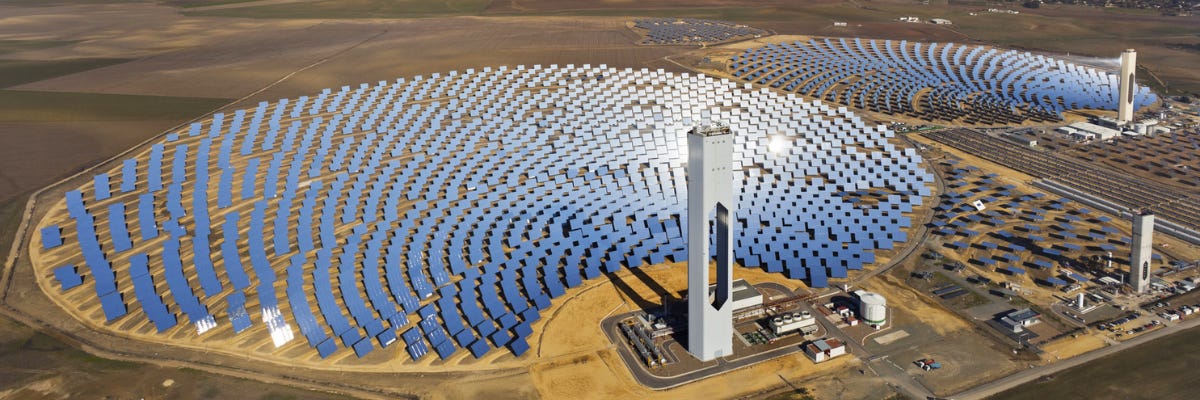
Over the past decade, the member states of the Gulf Cooperation Council (GCC) have established themselves as central actors in climate finance across the Global South, deploying capital at scale, shaping investment corridors, and positioning themselves within the next phase of global green development. The war now unfolding in and around the Gulf is jeopardizing the GCC’s climate finance ambitions.
In this piece, Gulf-based climate policy experts Aisha AlRumaihi, Owais Jwaied, Ahmed Samir Elbermbali, Rumaitha Al Busaidi, Deema Almasri, Jessica Obeid, and Dawud Al Ansari offer an initial assessment of the impacts of the war.
The contributors are all members of the Rihla Initiative for Green Economic Growth, which brings together practitioners and policymakers working across energy, climate finance, infrastructure, and economic strategy in the Gulf and the Global South.
Across the contributions, the impact of the war becomes clear. Gulf investment will become more selective, more closely tied to resilience and security, and more attentive to the systems that underpin economic stability, such as utilities like water and energy, trade flows, or digital infrastructure. Capital is unlikely to retreat from the Global South, but will be redeployed with greater emphasis on strategic alignment, risk management, and long-term positioning. This reordering of priorities will shape not only the scale and direction of GCC investment, but also the structure of climate finance across the Global South in the years ahead.
Gulf Climate Finance Is Adapting, Not Retreating
Aisha AlRumaihi
The war has disrupted supply chains, increased uncertainty, and raised the cost of long-term investment. In this environment, investors are expected to become more cautious, prioritizing shorter-term and lower-risk opportunities over climate projects that depend on stability and extended planning horizons. At the same time, heightened geopolitical risk has reinforced the importance of energy security, which may lead some GCC countries to sustain or expand oil and gas production in the near term. This may slow elements of the transition, but it does not suggest a departure from longer-term climate objectives.
These pressures are also creating new openings. GCC countries are expected to increase investment in local innovation, regional capabilities, and domestic industries across renewable energy, green technologies, and sustainable infrastructure. This shift reduces exposure to external disruptions while strengthening resilience within national economies. At the same time, recent developments have elevated food and water security as core components of the climate finance agenda, pushing toward a more integrated and systems-based approach to sustainability.
The effect of the war is a shift in the form of Gulf climate finance rather than a retreat from it. Investment is becoming more flexible, more adaptive, and more closely aligned with resilience, while continuing to support clean energy, infrastructure, and climate partnerships across the Global South.
Gulf Green Investment Is Becoming More Selective
Owais Jwaied
Regional conflicts are unlikely to curtail GCC engagement in climate finance across the Global South. They are, however, reshaping its priorities, geographical orientation, and strategic function. The conflicts in and around the region are pushing Gulf states to view green investment not only as a mechanism of decarbonization, but also as an instrument of strategic resilience. Economic security, energy security, and climate resilience can no longer be treated as separate domains, particularly given the vulnerabilities associated with the Strait of Hormuz and repeated threats to critical infrastructure.
Climate finance is increasingly being integrated into a broader GCC strategy aimed at reducing exposure to shocks, protecting trade routes, and consolidating regional influence. This shift is making Gulf green investment more selective and more closely shaped by security considerations, even as countries such as the UAE, Saudi Arabia, and Qatar retain the financial capacity to invest abroad. Projects that combine climate and strategic value are likely to be prioritized, including grid resilience, desalination, food security, strategic ports, battery storage, green logistics, and renewable energy linked to industrial corridors.
The main effect of the war is not a reduction in Gulf climate ambition, but a narrowing of how and where that ambition is deployed. Without stronger de-risking mechanisms, blended finance structures, and local institutional capacity, more fragile parts of the Global South risk receiving less transformative finance, even as GCC green investment continues at scale.
Gulf Climate Finance Is Under Pressure
Ahmed Samir Elbermbali
Before the war, Gulf climate finance had real momentum. Major sovereign funds, infrastructure commitments, and clean energy deals had positioned the region as one of the few actors with both the capital and the time horizon to drive investment across the Global South. This mattered in a context where climate finance needs were already far outpacing delivery, particularly in lower-income and frontier markets.
That trajectory is now under strain. The region expected to anchor the next phase of global green investment is operating in a more constrained environment, shaped by heightened risk, pressure on infrastructure, and a weaker outlook for long-term capital deployment. Gulf climate finance has not receded, but it is facing more difficult conditions at a moment when demand for it remains high.
Capital depends on stability to move at scale. The immediate effect is not a collapse in Gulf climate ambition, but a slowdown in delivery. Commitments may remain in place, but implementation is likely to take longer, risk appetite is narrowing, and the gap between pledged and deployed capital is set to widen.
Environmental Risk Is Reshaping Gulf Climate Finance
Rumaitha Al Busaidi
The environmental cost of the war is becoming central to water security, maritime stability, and the systems that sustain daily life. As pressure on energy infrastructure reveals structural vulnerabilities, desalination systems are emerging as a critical point of exposure. Facilities damaged by strikes are being assessed not only for structural integrity, but for environmental contamination, while the chemicals required for their operation continue to depend on maritime access through a strait that has been under sustained disruption.
Beyond individual facilities, the environmental footprint of the war is expanding across systems and geographies. Early analysis of the first weeks of fighting estimated more than 5 million tonnes of carbon dioxide equivalent, exceeding the annual emissions of dozens of countries. Toxic smoke from fuel and petrochemical fires, oil spills moving across maritime routes, and damage to marine ecosystems are placing additional strain on environments that were already under pressure. These dynamics are exposing the water-energy-food nexus in its most physical form. The Strait of Hormuz carries around a fifth of the world’s oil, more than 70 percent of GCC food imports move through it, and freshwater production depends on energy-intensive desalination supported by steady maritime supply chains. When the strait came under pressure, all three systems were affected simultaneously.
This has direct implications for Gulf climate finance. The war is shifting capital toward environmental resilience, water security, and the protection and repair of critical systems. Investment priorities are placing greater weight on safeguarding infrastructure, managing ecological risk, and strengthening the systems that sustain daily life, both within the Gulf and across similarly exposed regions.
Water Security Is Moving to the Center of Gulf Investment
Deema Almasri
The war is exposing a vulnerability that has long been overshadowed by the focus on oil and gas: water. With direct strikes on energy and civilian infrastructure, including water tankers and desalination plants, the Gulf is being forced to recalibrate. The era of large external climate and green economic investments is being reassessed, with greater emphasis now placed on domestic infrastructure resilience.
From a water security perspective, this shift is not surprising. In the Gulf, water and energy are tightly interconnected. Desalination accounts for a significant share of electricity use across GCC countries, and in a region where more than 90 percent of municipal water depends on desalination and groundwater, disruptions to power infrastructure translate directly into water insecurity. Recent developments have made clear that energy infrastructure is also water infrastructure. This is changing the underlying logic of investment. Efficiency and cost optimization are no longer sufficient. Redundancy, flexibility, and the ability to withstand disruption are moving to the centre of planning and financing decisions.
This will shape Gulf climate finance at home and abroad. Outward investment is unlikely to disappear, but it is becoming more selective and more closely tied to resilience and security objectives. Capital is expected to prioritise projects that strengthen food systems, water and sanitation, clean and reliable power, and supporting infrastructure across the Global South. In this context, investment decisions are increasingly guided by the extent to which they contribute to shared resilience and long-term stability.
Resilience Is Driving the Next Phase of Gulf Renewable Investment
Jessica Obeid
The vulnerabilities exposed across water and environmental systems are mirrored in the region’s energy infrastructure. The conflict in the Middle East is destabilizing energy markets, but it is also set to drive the next phase of GCC green investment, particularly across the Global South. Energy infrastructure has long been a target in times of war, but recent developments have elevated pipelines, refineries, and LNG facilities into instruments of geopolitical and economic pressure. From drone strikes on Gulf energy assets to the use of fuel supply as leverage, these dynamics have exposed the risks embedded in fossil fuel-dependent systems and oil-based economic models.
This is shifting investment priorities. Sustainability, efficiency, and resilience are taking on a more central role as pillars of economic and energy security. Over the medium to long term, the move toward localized and clean energy systems is expected to accelerate, driven increasingly by security considerations. GCC countries are well positioned to shape this transition, supported by capital capacity and a strategic approach focused on geographic diversification and long-term positioning in global energy markets.
For Gulf climate finance, this translates into a stronger focus on decentralised renewable systems, including solar generation, battery storage, and distributed microgrids, which are structurally more resilient than concentrated fossil fuel infrastructure. Investment in these systems across the Global South serves not only climate objectives, but also longer-term economic and strategic interests. Gulf capital is therefore likely to remain active at scale, with resilience emerging as a core driver of deployment.
Climate Technology Is Gaining Strategic Importance in the Gulf
Dawud Al Ansari
It may be tempting to assume that climate tech will become less relevant in the post-war Gulf. Crisis conditions tend to shift attention toward hard security, reconstruction, and economic stabilization, while foreign direct investment is likely to become more constrained. Yet the opposite may prove true. The war is reinforcing the importance of resilience and the internalization of financing, while pre-existing domestic priorities, particularly the need to diversify economic structures, remain firmly in place.
Declining FDI is unlikely to halt economic expansion in the GCC, but it will change how it is financed. Where foreign capital becomes less reliable, domestic funding will need to compensate, and GCC sovereign wealth funds have the institutional capacity to do so. This is likely to expand the range of sectors supported domestically and lower the threshold for investments justified by resilience. At the same time, industrial policy priorities are likely to be reassessed. Under these conditions, expected returns alone no longer determine sectoral viability. Greater weight is placed on whether a sector can be financed independently, operate with limited external dependency, and contribute directly to systemic resilience.
Climate tech meets these criteria. Defined as the engineering and systems-level adaptation of infrastructure, water, and the built environment to climate stress, it connects domestic development, strategic resilience, and external engagement. For Gulf climate finance, this implies a greater focus on adaptation infrastructure, water systems, and other engineering-intensive sectors, alongside continued outward investment. The war is therefore likely to elevate climate tech within GCC economic planning and investment strategies, rather than marginalize it.
Section: (rihla-initiative) Photo: Acwa