
Dear Colleague,
After a week of news reports describing a rebound in oil exports through the Strait of Hormuz, Iran has stepped-up attacks against oil tankers. Shipping costs remain elevated and physical barrels of crude oil are trading as high as $150. Meanwhile, U.S. economic pressure on Iran continues to mount, as sanctions and the blockade disrupt critical supply chains.
Still, American and Iranian negotiators remain far apart. This past week, our team looked beyond the headlines and examined how the oil price influences U.S. and Iranian negotiating positions, how Iran is adapting to economic pressure, and how these pressures are impacting ordinary Iranians trying to afford food and medicine.
Please click the headings below to access the related articles.
Best regards,
Layla Saghafian
Engagement Coordinator
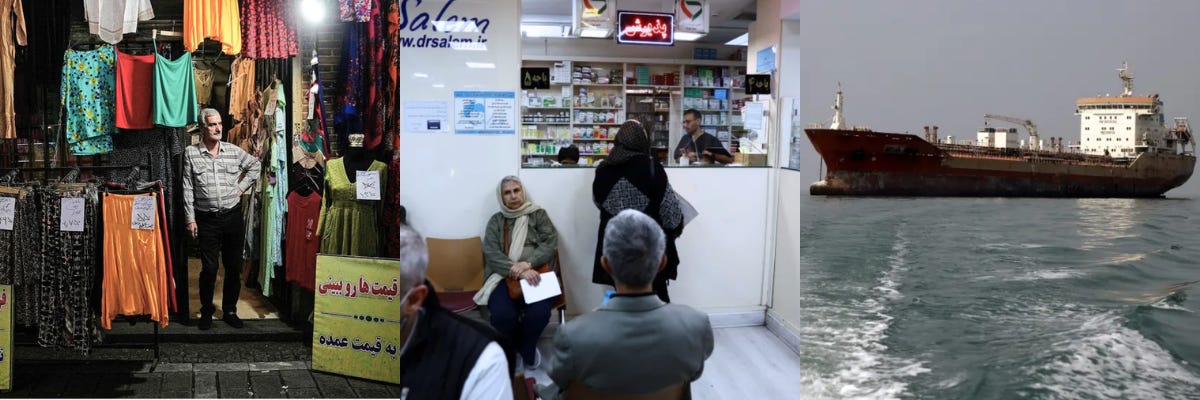
In an article published last week, The Economist examined the state of the Iranian economy, focusing on collapsing oil exports, rising inflation, and disrupted trade. While the situation is dire, Iranian leaders remain unwilling to capitulate to U.S. demands. In detailing the extent of economic hardship, the article cites Esfandyar Batmanghelidj and Josefine Petrick’s analysis Iranian dependence on air freight to maintain medical imports. They estimate that roughly 60% of medical imports to Iran arrive by air. The aviation sanctions imposed by the Trump Administration threaten Iran’s medical supply chains, limiting access to safe pharmaceuticals that many patients depend on.
More oil is moving through Hormuz, but uncertainty and pressure on oil markets persist.
Speaking to Responsible Statecraft, the Quincy Institute’s online publication, analyst Ezana Tedla explained why the recent increase in oil shipments through the Strait of Hormuz has failed to restore calm to oil markets. With the ongoing war, ships remain at risk, and a recent spate of attacks demonstrates the continued threat Iran poses to commercial vessels. The risk premium associated with moving oil through the strait, reaching $35 per barrel, is unlikely to dissipate until a durable ceasefire can be reached, a low probability scenario.
The U.S. blockade is making basic goods less affordable in Iran.
Speaking with Al Jazeera, Maryam Ashrafi explained how the U.S. naval blockade is interrupting imports of grain and other soft commodities. While some shipments are being redirected through Iran’s northern Caspian ports, the smaller vessels servicing Iran’s northern ports cannot carry the same volumes as those servicing ports in the South. Maryam also described how rising food prices are pushing consumers to buy cheaper, lower-quality goods, and how shortages of raw materials used in products such as margarine are contributing to further price increases.
Rebounding oil shipments do not eliminate the risk of further escalation.
Aside from the risk to commercial vessels, Fortune cited Esfandyar’s assessment that Iran retains the capacity to do more harm than attacking ships making “unauthorized” transits—Iran can still damage regional oil infrastructure, including drilling and refineries. His assessment highlights why CENTCOM’s recent operational success in moving oil through the Strait of Hormuz does not mean the crisis has abated. If the current economic pressure persists and the U.S. continues to reject diplomatic opportunities, Iran has both the means and motivate to escalate.
Thank you for engaging with our work. If you would like to share content from the Bourse & Bazaar Foundation with a friend or colleague, please click the button below: