
Dear Colleague,
While economic pressure is straining Iran’s economy, the effects are starkly different for ordinary citizens, business leaders, and political elites. We have been working to understand and explain these varied outcomes through our research and media engagements.
Our recent analysis includes two new articles published on our own platform and insights shared with the New York Times and the Neue Zürcher Zeitung.
Please click the headings below to access the related articles.
Best regards,
Layla Saghafian
Engagement Coordinator
Wartime inflation is creating new pressures for Iran’s BNPL providers.
As our analyst Ezana Tedla explains in this new piece, “By Now, Pay Later” programs in Iran are expanding rapidly as households use interest-free credit to manage rising prices and buy goods now before costs increase further. Ezana argues that inflation and wartime disruptions are making this model harder to sustain, as providers seek to recover costs from merchants and borrowers. Adoption of BNPL may offer short-term relief, but it is contributing to debt pressures and potentially reinforcing inflation.
High inventory levels have helped Iranian industries sustain production in the face of wartime disruptions.
In the third edition of our “Critical Questions” series of research notes, Ezana examines how various Iranian industries may be able to maintain production using inventories already within the country. Drawing on quarterly filings from companies listed on the Tehran Stock Exchange, he compares sectors with different levels of exposure to sanctions. The analysis explores how these stocks could reduce the effects of extended disruptions to imports and show which industries may struggle as their supplies run out.
U.S. economic pressure is unlikely to force Iran into major concessions.
In a feature interview for Neue Zürcher Zeitung, Esfandyar Batmanghelidj spoke with journalist Rewert Hoffer about the ongoing U.S.-Iran negotiations. Esfandyar explains that despite losing oil revenues, Iran’s government can continue paying domestic expenses in rials by cutting spending and monetizing the remaining fiscal deficit. This in turn leads to further inflation and reduces households’ purchasing power and demand for imports, helping the state withstand external pressure at the expense of living standards and long-term economic development. Esfandyar also argues that the fear of government violence discourages ordinary Iranians from launching renewed protests, limiting the likelihood that economic hardship will destabilize the Islamic Republic.
Iran’s is proving able to evade aviation sanctions, but keeping aging aircraft in service puts passengers at risk.
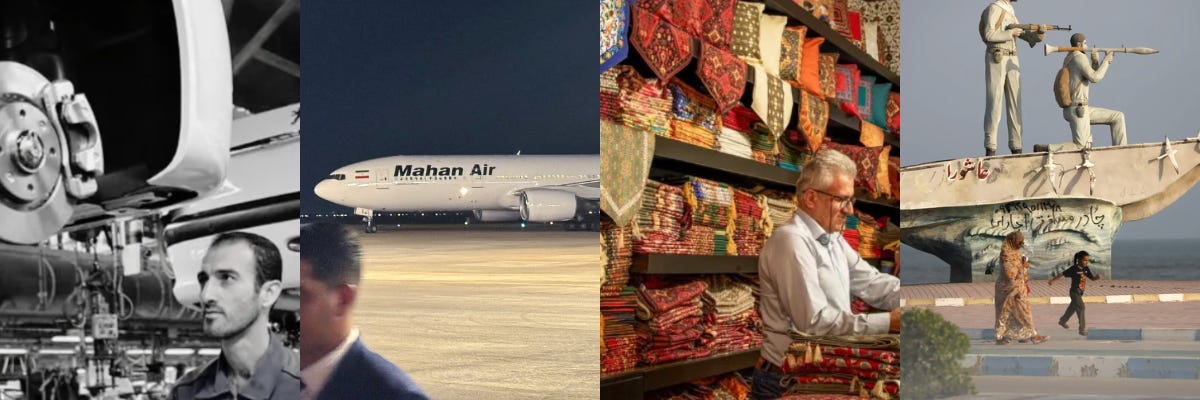
Speaking with Damien Cave of the New York Times, Josefine Petrick describes Iranian efforts to evade aviation sanctions, procure parts, and keep aircraft airborne as “puzzle piecing a plane together.” She argues that sanctioning countries must account for the indirect effects of their policies, including the dangers associated with aircraft operating far longer than they would elsewhere. The continued flights of Mahan Air, Iran’s largest private airline, to Southeast Asia exemplify both the limits of U.S. efforts to economically isolate Iran and the impact of sanctions on passenger safety.
Thank you for engaging with our work. If you would like to share content from the Bourse & Bazaar Foundation with a friend or colleague, please click the button below: